Meme coin vs regulated crypto
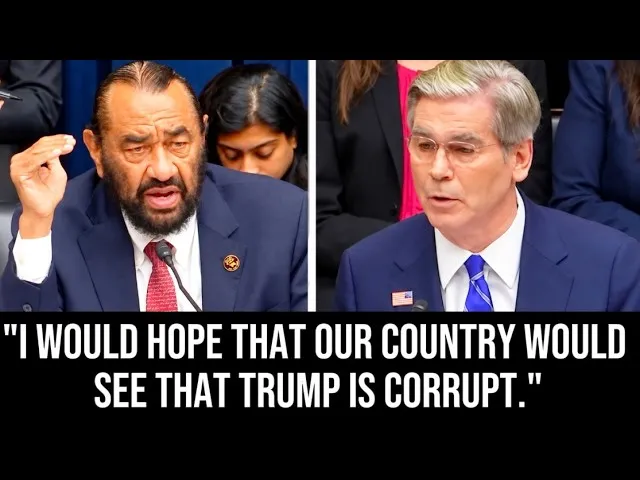
Video: WHOA: Al Green GRILLS Bessent over Trump's meme coin “scam”
Want articles like this for your own video to promote it on YouTube and Google? Order them through the Telegram bot @sat_sit_bot. It writes articles around your video, embeds the video and publishes them on popular niche websites (no ads). Free trial — 50 articles.
A meme coin is the weaker choice for a retail investor: it has no cash flow, no claim on assets and no disclosure, so its price depends only on someone paying more later. Regulated crypto assets are not safe either, but they come with supply transparency, custody rules and exchange listing standards that a political meme coin deliberately avoids. That gap is exactly what Senator Al Green pressed Treasury Secretary Scott Bessent on in a congressional exchange over Trump-branded tokens, where the word scam was used on the record.
What Al Green asked Scott Bessent about Trump's meme coin
The core of the hearing was a simple question: can a token launched by a sitting president be sold to the public without the disclosures that apply to every other financial product? Green framed the Trump meme coin as a scam and pushed Bessent to defend or distance himself from it. Bessent's answers stayed inside the language of markets and innovation rather than addressing the conflict of interest directly, which is why the clip travels so well — the evasion is the story.
The exchange matters for traders because it moves a political token from the gossip column into the regulatory column. Once a Treasury secretary is asked on the record about a specific coin, the question of who audits it, who holds the reserves and who can sell first stops being rhetorical.
Why a meme coin behaves like a Ponzi rather than an investment
A meme coin has no revenue, no collateral and no legal claim, so the only way an early buyer profits is by finding a later buyer at a higher price. That structure is not automatically fraud, but it fails the same test a Ponzi scheme fails: returns come from new deposits, not from the asset itself. Compare that with a regulated crypto product, where supply schedules, custody arrangements and exchange listing rules are published and auditable.
The practical checklist for telling the two apart:
- Is there a published supply schedule, or can the issuer mint more at will?
- Does anyone hold the tokens in verifiable custody, or are they in a wallet tied to the promoter?
- Are the largest holders' positions visible, and how concentrated are they?
- Does the token give any claim on revenue, assets or governance, or is it purely a collectible?
- Is there a lock-up on insider allocations, or can the launch team exit on day one?
A token that fails questions 1, 2 and 5 is a transfer of money from late buyers to early ones, whatever the branding says.
The conflict of interest when a sitting president sells a token
When the issuer is a sitting president, the ordinary risks compound: the same office that shapes crypto policy, enforcement priorities and market sentiment is also the brand behind the asset. Buyers are then not just betting on a coin — they are betting on the behaviour of the person who regulates the market the coin trades in. Green's line of attack was precisely that this cannot be separated from the office.
This is why comparisons with ordinary celebrity tokens fall short. A celebrity has no power to change securities law or appoint the regulators who decide whether a token is a security. A president does.
Typical doubts from traders about political tokens
Many retail buyers are not naive about the mechanics — they simply assume they will exit before the collapse. That is the single most common assumption behind meme coin losses, and it is worth naming plainly: the strategy only works if someone slower buys after you. Several sceptics also point out that buyers are often paying for access or proximity rather than for the asset, which makes the price even harder to model than ordinary speculation.
Other recurring doubts:
- Is this money laundering? A token with thin liquidity and opaque holders is a poor vehicle for clean investing and a convenient one for moving value quietly, which is why compliance teams treat it as high risk.
- Is this a Ponzi or a pyramid? The distinction is mostly legal labelling; economically both depend on recruiting later money, and the token version adds a public order book.
- Is all crypto like this? No. Bitcoin and regulated exchange-traded products have disclosed supply and established custody; a freshly minted political token has neither.
- Am I just a sucker? Only if you buy without knowing who holds the supply and who can sell first.
How to trade the meme coin sector without becoming the exit liquidity
If you still want exposure to meme coin volatility, treat it as a gambling budget with hard rules, not as a portfolio allocation. Concretely: cap the position at a small fixed percentage of your liquid capital, check the top-holder concentration before entering, avoid tokens where insiders hold a large unlocked share, and set an exit before you buy rather than after the first red candle.
For the regulated side, the comparison is less exciting but more defensible: disclosed supply, audited custody, exchange listing standards and a paper trail if something goes wrong. The trade-off is real — you give up the 100x fantasy in exchange for not being the last buyer in a queue you cannot see.
What the hearing signals for meme coin regulation
A public grilling of the Treasury Secretary over a specific token usually precedes rulemaking, not just headlines. Expect more scrutiny of how political and celebrity tokens are marketed, who is allowed to list them, and whether existing securities and anti-money-laundering rules already cover them. For traders, the takeaway is that the regulatory risk on meme coins is now part of the price, and it can move faster than the token itself.
Bottom line on meme coin versus regulated crypto
A meme coin is a bet on the next buyer, while regulated crypto is a bet on a disclosed asset — the first is cheaper to enter and far more expensive to exit. The Al Green and Scott Bessent exchange makes the political version of that bet even riskier, because the issuer and the regulator are entangled by design. Daniel Reed's breakdown of the hearing is a useful record of how that argument was made in public. Anyone buying a political token should assume the insiders can sell before they can, and size the position accordingly.
Key takeaways
- Senator Al Green pressed Treasury Secretary Scott Bessent over Trump-branded meme coins, calling the setup a scam during a heated exchange.
- Meme coins have no cash flow, no claim on assets and no regulatory filing; their price depends entirely on the next buyer paying more.
- A token sold by a sitting president creates a conflict of interest that no registered security or commodity faces.
- Retail buyers of political tokens often pay for access or hype rather than for any underlying business.
- Regulated crypto assets at least disclose supply, custody and exchange listing rules, which meme coins typically skip.
Questions & answers
Is a meme coin the same thing as a Ponzi scheme?
Not legally, but the economics rhyme. A meme coin generates returns only when new buyers pay more than earlier ones, since there is no revenue or collateral behind it. A Ponzi scheme does the same thing while pretending there is an underlying investment.
Why is a president selling a token a bigger problem than a celebrity doing it?
Because the office controls crypto policy, enforcement priorities and regulator appointments. A buyer is effectively betting on the behaviour of the person who shapes the rules the token trades under, which no celebrity token involves.
Can you make money trading meme coins anyway?
Some traders do, but the edge comes from exiting before the crowd, not from the asset. If you enter, cap the position at a small share of liquid capital, check holder concentration and decide your exit before buying.
What should I check before buying any new token?
Look at the supply schedule, who holds the largest wallets, whether insiders are locked up and whether the token grants any claim on assets or revenue. If the issuer can mint more or sell first, you are the exit liquidity.
Source: WHOA: Al Green GRILLS Bessent over Trump's meme coin “scam” · Markdown version